
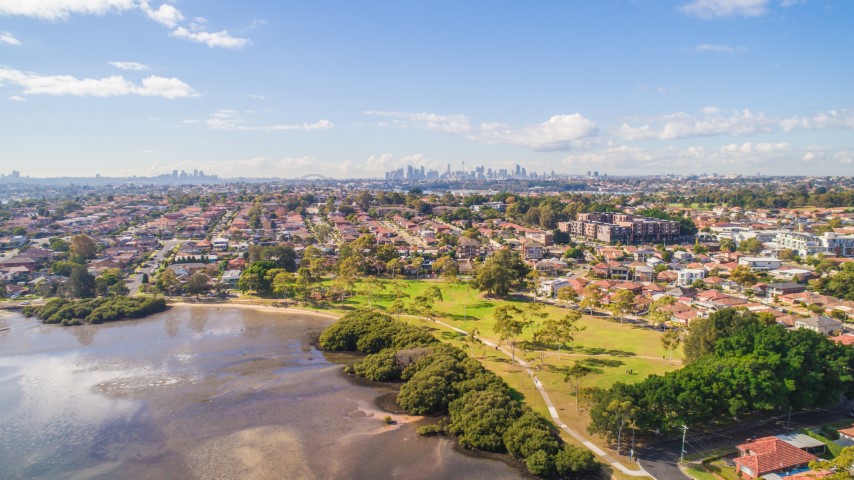
Help plan the City of Canada Bay's future and steer decisions on issues that matter to you.
Share your feedback
Collaborate Canada Bay
Food waste
FOGO: Food Organics & Garden Organics

Introducing your new Food Organics & Garden Organics (FOGO) Service
FOGO is a recycling service that allows you to put food scraps and garden waste together into your green-lidded bin for recycling. Once FOGO is introduced from July 2027, your green-lidded bin will be collected weekly. Simply place it out on your usual collection day and it will be collected for processing and turned into compost. Your red and yellow bin services will remain the same.
As part of the NSW Government's transition to state-wide food and garden organics recycling, all councils must provide a FOGO service to households by 2030. By diverting food and garden waste from landfill, FOGO helps reduce greenhouse gas emissions while recovering valuable organic material to create compost for parks and gardens.
Our goal is to deliver a service that is easy to use and works well for our community. We'll provide residents with plenty of information before the phased roll-out begins to ensure the transition is as smooth as possible. Residents included in Phase 1 of the rollout will notified by direct mail in early 2027. Find out when FOGO is coming to your address and learn more below.
Using FOGO is simple and easy. Each household will receive a kitchen caddy and a supply of compostable liners (certified AS4736) to help collect food scraps in the kitchen. Simply place your food scraps and any leftovers into the caddy throughout the week. When the caddy is full, empty the contents into your green-lidded wheelie bin, alongside your garden waste.

Phase 1: July 2027
All detached houses and select multi-unit properties (such as duplexes, townhouses and low-rise units) start FOGO.

Phase 2: 2029
All other remaining multi-unit properties start FOGO.

Not sure which phase you're in?
Check when your address will start FOGO on our online collection calendar.
Remember: Remove all packaging, stickers, plastic wrapping and containers before placing food waste in the FOGO bin. Only organic material and certified compostable liners (AS4736) should go into the FOGO bin.
What changes for me?
New FOGO-ready green-lidded bins
As part of the FOGO rollout, existing green-lidded wheelie bins will be swapped with new FOGO-ready green-lidded wheelie bins.
Most current green-lidded bins were designed for garden waste only and are not suitable for the FOGO service. Many have ventilation openings that can allow liquids to escape, making them unsuitable for food waste and more difficult to keep clean.
Council will provide residents with plenty of notice before green-lidded bins are replaced, including instructions on when to place your existing bin out for collection. Your old bin will be replaced with a new FOGO-ready bin before your FOGO service begins.
New kitchen caddy
All households will receive a kitchen caddy and compostable liners (certified AS4736) to help collect food scraps in the kitchen. These make it easier for you to separate food waste from general rubbish and then transfer it to your green-lidded wheelie bin with no drips, spills or mess.
What you can put in the green-lidded bin
Once FOGO starts, you can place both food scraps and garden waste into your green-lidded FOGO bin, including:
Fruit and vegetable scraps
Meat and bones
Seafood and shellfish
Bread, rice and pasta
Dairy products
Coffee grounds and tea leaves
Eggshells
Leftovers and spoiled food (everything from curry to pizza)
What stays the same?
All your other waste services remain the same
You will still only have three wheelie bins: one red, one yellow and one green. There will be no changes to your red-lidded general waste bin service. It will continue to be collected weekly on your usual collection day. The introduction of FOGO is designed to complement your existing waste services by providing a dedicated way to recycle food scraps and garden waste. By placing these materials in your green-lidded FOGO bin instead of your red bin, you'll be able to significantly reduce the amount of waste sent to landfill while keeping your regular waste collection service unchanged.
Your collection days and frequency
Once FOGO is introduced, your green-lidded bin will be collected weekly instead of fortnightly. Your collection day will remain the same, with only the frequency increasing to ensure food and garden organics are collected regularly and processed efficiently.
Using FOGO
How do I use my caddy?
Using FOGO is simple and easy. Each household will receive a kitchen caddy and a supply of compostable liners (certified AS4736) to help collect food scraps in the kitchen. Simply place your food scraps and any leftovers into the caddy throughout the week. When the caddy is full, empty the contents into your green-lidded wheelie bin, alongside your garden waste. Your green-lidded bin will then be collected weekly and your waste will be taken for processing and turned into nutrient-rich compost for use on garden beds.
How can I prepare?
Start thinking about how you can separate food scraps from your general waste. Council will provide guidance, resources and support to help households transition to the new service.
Will my bin smell or attract pests/maggots?
FOGO bins can be managed easily by following a few simple tips:
Keep the bin lid closed.
Store bins in a cool, shaded area where possible.
Freeze meat and seafood scraps and add them to the bin the night before collection.
Empty your kitchen caddy regularly.
Place food waste underneath garden material.
Put bins out for collection regularly.
What should I do during hot weather?
Using approved compostable liners (AS4736), freezing meat scraps until collection day and keeping your caddy and wheelie bin in the shade can help reduce odours in hot weather.
Where can I get more liners?
Council will provide participating households with a supply of compostable caddy liners every six months. You can also purchase 8L compostable kitchen caddy liners from most major supermarkets and online retailers. When purchasing liners, ensure they are certified to the Australian Standard AS4736 for commercial composting. Be aware of "greenwashing" claims. Some products are marketed as "eco-friendly", "biodegradable" or "plant-based", but may still contain plastic and are not suitable for FOGO processing. Using non-certified liners can contaminate the composting process and may result in valuable organic material being sent to landfill. Please note that as compostable liners are designed to break down naturally, they have a limited shelf life. To maintain their quality, store unused liners in a cool, dry place and avoid purchasing more than you are likely to use within a reasonable period.
What happens to my FOGO waste after collection?
The material is transported to an organics processing facility where it will be commercially transformed into compost and soil conditioners used in parks, landscaping and agriculture.
What happens if I put the wrong items in my FOGO bin?
Contamination can affect the quality of the compost produced from FOGO materials. If it is safe to do so, remove the item from your FOGO bin and place it in the correct bin. Council will provide guidance and resources to help residents use the service correctly and minimise contamination.
What if I don't have garden waste?
FOGO is for everyone. Even households without gardens generate food scraps such as fruit peels, leftovers, coffee grounds and eggshells that can be recycled through the FOGO service.
Council runs food waste avoidance programs to help you reduce your food waste!
Compost Capers
The Compost Capers program aims to help you get started composting at home. With educational videos, fact sheets and even giveaways, Compost Capers will help you turn your food and garden scraps into a valuable resource that will improve soil and feed your plants.
Why compost?
Composting is one of the most important and easiest things we can do to benefit the environment. Approximately 50 per cent of the rubbish Australians put in the everyday mixed-waste garbage bin is food scraps.
When organic material such as garden waste and food scraps is buried or compacted anaerobically (without air) in landfills, it causes the production of methane gas, a greenhouse gas contributing to climate change.
When food scraps are turned into compost and added to the soil, the benefits are:
- greatly increasing carbon absorbing capability of the soil, reducing the effects of climate change
- enhances water retention ability of the soil, reducing the need for water by an average of 30 per cent
- greatly improves soil quality, texture and provides rich nutrients/fertiliser for plants.
There are many ways to compost, using a compost bin and/or worm farm are just two ways we can recycle organics at home. For more information attend one of Council’s free workshops or download: